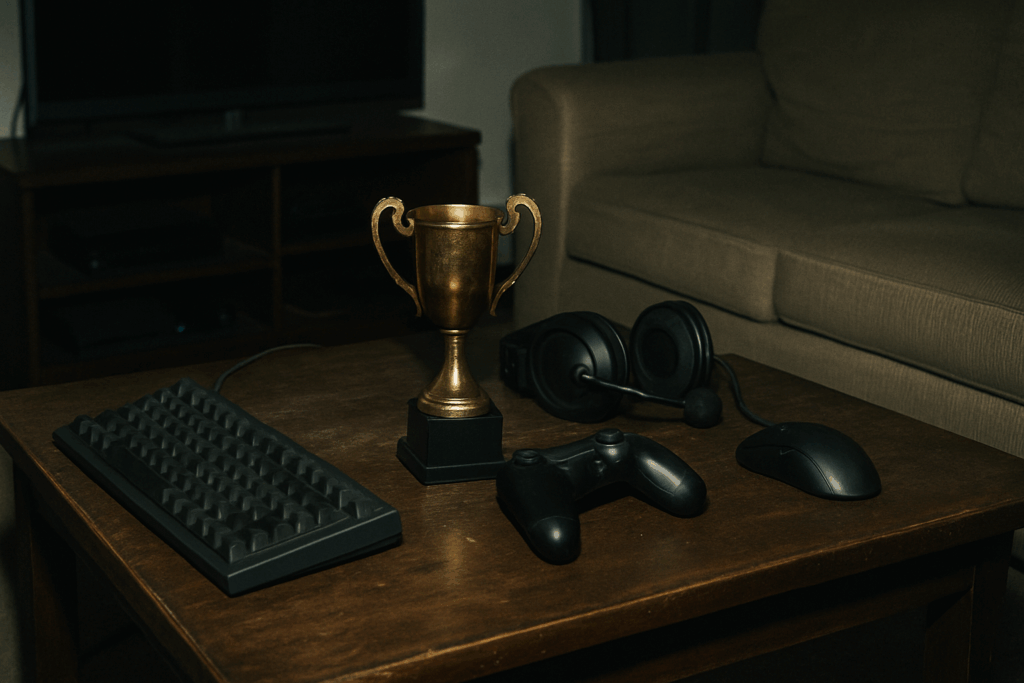

For gamers trying to get the most performance out of their rigs, smart tweaks can mean the difference between lag and victory. Whether you’re running AAA titles or just want a smoother experience, knowing the right gaming pc hacks togamesticky can give you a huge edge. For an in-depth breakdown of steps and tricks, check out this strategic guide to enhancing your setup.
Optimize Your Graphics Settings
Before you touch hardware or software configurations, start with what’s already built into your games and PC.
Most modern games offer dozens of graphical options. If you’re experiencing frame drops, prioritize turning down or off:
- Shadows
- Anti-aliasing
- Motion blur
- Reflections
Each of these can drain GPU power with minimal gain in gameplay quality. For NVIDIA users, GeForce Experience has “optimal” settings for most games that balance beauty and performance.
Also, don’t forget to scale resolution appropriately. Running a game at 1440p on a mid-tier card might look nice, but it can tank frame rates. Dropping to 1080p can deliver buttery-smooth gameplay without sacrificing too much visual fidelity.
Upgrade and Manage Your Drivers
Your graphics card is only as good as the software behind it. One of the most overlooked gaming pc hacks togamesticky is simply updating your GPU drivers regularly.
Both NVIDIA and AMD frequently release driver updates optimized for new game releases. These updates aren’t just bug fixes—they often include significant performance improvements.
Beyond GPU drivers, make sure your chipset, audio, and network drivers are also up to date. Many system instabilities can come from outdated core drivers you never think about. Use tools like Driver Easy or Snappy Driver Installer to simplify the process.
Kill Background Processes and Startup Programs
Your PC could be doing ten unnecessary things every time you launch your favorite game. From automatic updates to lingering browser tabs, background processes chew CPU cycles and memory bandwidth.
Here’s how to fix it:
- Task Manager: Hit Ctrl+Shift+Esc and kill processes that aren’t game-essential.
- Startup Programs: Go to Task Manager > Startup tab and disable non-critical software from launching when Windows boots.
- Background Apps: In Settings > Privacy > Background Apps, disable anything unneeded that’s allowed to run at all times.
These changes can recover several hundred MBs of RAM and reduce CPU load—ideal in games that are CPU-intensive.
Overclock: Carefully and Smartly
For more seasoned users, overclocking offers a serious boost. Whether it’s your GPU, CPU, or even RAM, increasing clock speeds can net performance gains up to 20%, depending on the hardware.
- GPU overclocking can be done with MSI Afterburner, a free and trusted tool.
- CPU overclocking is best handled via BIOS on desktops or Intel XTU software.
- RAM timing tweaks can help with games reliant on memory bandwidth.
Always stress-test after overclocking using software like Prime95 or FurMark to make sure your system remains stable. And most crucially—monitor thermals. Don’t cook your system in pursuit of extra frames.
Fine-Tune Windows for Gaming
Another underutilized advantage? Customize Windows itself for better gaming performance—another one of the more simple but impactful gaming pc hacks togamesticky.
Here’s a checklist:
- Game Mode: Enable it in Windows Settings > Gaming. It prioritizes gaming processes.
- Power Plan: Switch to “High Performance” or set up a custom, game-optimized power plan.
- Disable Notifications: Turn off Focus Assist and unwanted background alerts while playing.
- Adjust Visual Effects: Go to System Properties > Performance Settings and select “Adjust for Best Performance” to cut unnecessary flair.
You’d be surprised at how much smoother games run when Windows stops trying to be flashy.
Use Performance Monitoring Tools
Don’t guess what’s holding your system back—find out.
Apps like HWMonitor, MSI Afterburner, and NZXT CAM let you see real-time stats on:
- CPU and GPU usage
- Memory load
- Cooling performance
- Clock speeds
You’ll know instantly if your RAM is maxing out or your GPU is getting throttled. From there, you’re armed to troubleshoot intelligently—not just stab in the dark.
Keep Your Rig Clean and Cool
This one sounds basic, but it’s easily forgotten.
Dust buildup restricts airflow and leads to overheating, which causes thermal throttling—automatic performance reduction to keep temps safe.
Here’s your maintenance checklist:
- Use compressed air to clean fans, GPU fins, and heatsinks every few months.
- Re-apply thermal paste on CPUs every 2–3 years if you’re confident enough to open your system.
- Make sure your case airflow is optimized (intake fans in front, exhaust out back or top).
A cooler PC is a faster PC. Period.
Consider Faster Storage
Still gaming off a traditional HDD? That may be your biggest bottleneck.
Move games to an SSD, or better yet, an NVMe SSD if your motherboard supports it. Load times drop drastically—and in some open-world games, faster asset loading means smoother gameplay too.
It’s also smart to avoid installing games on your primary boot drive. Keep things separate to minimize I/O contention.
Tweak In-Game Launch Options and Config Files
For certain games, there are launch options that can be added in Steam or specific .ini or .cfg files that boost performance.
Example (Steam-based launch options):
-novid -high -threads 4 -nod3d9ex
These can disable intro videos, prioritize the game, and manually assign hardware threads. But tread carefully—play with values only if you know what they mean or follow trusted guides.
Wrapping It Up
There’s no one-size-fits-all solution for gaming performance, but stacking the small wins—optimized graphics, tuned OS, better airflow—adds up fast. The reality is, most players aren’t maxing their gear’s potential, but they could be with just a few smart changes.
If you’re ready to dive deeper into real, test-driven methods to upgrade your gaming experience, don’t miss this strategic guide to enhancing your setup with even more gaming pc hacks togamesticky you can try today. The best performance boost might be just one tweak away.

 There is a specific skill involved in explaining something clearly — one that is completely separate from actually knowing the subject. Loisha Schaeferer has both. They has spent years working with latest gaming news in a hands-on capacity, and an equal amount of time figuring out how to translate that experience into writing that people with different backgrounds can actually absorb and use.
Loisha tends to approach complex subjects — Latest Gaming News, Upcoming Game Releases, Esports Highlights and Updates being good examples — by starting with what the reader already knows, then building outward from there rather than dropping them in the deep end. It sounds like a small thing. In practice it makes a significant difference in whether someone finishes the article or abandons it halfway through. They is also good at knowing when to stop — a surprisingly underrated skill. Some writers bury useful information under so many caveats and qualifications that the point disappears. Loisha knows where the point is and gets there without too many detours.
The practical effect of all this is that people who read Loisha's work tend to come away actually capable of doing something with it. Not just vaguely informed — actually capable. For a writer working in latest gaming news, that is probably the best possible outcome, and it's the standard Loisha holds they's own work to.
There is a specific skill involved in explaining something clearly — one that is completely separate from actually knowing the subject. Loisha Schaeferer has both. They has spent years working with latest gaming news in a hands-on capacity, and an equal amount of time figuring out how to translate that experience into writing that people with different backgrounds can actually absorb and use.
Loisha tends to approach complex subjects — Latest Gaming News, Upcoming Game Releases, Esports Highlights and Updates being good examples — by starting with what the reader already knows, then building outward from there rather than dropping them in the deep end. It sounds like a small thing. In practice it makes a significant difference in whether someone finishes the article or abandons it halfway through. They is also good at knowing when to stop — a surprisingly underrated skill. Some writers bury useful information under so many caveats and qualifications that the point disappears. Loisha knows where the point is and gets there without too many detours.
The practical effect of all this is that people who read Loisha's work tend to come away actually capable of doing something with it. Not just vaguely informed — actually capable. For a writer working in latest gaming news, that is probably the best possible outcome, and it's the standard Loisha holds they's own work to.