
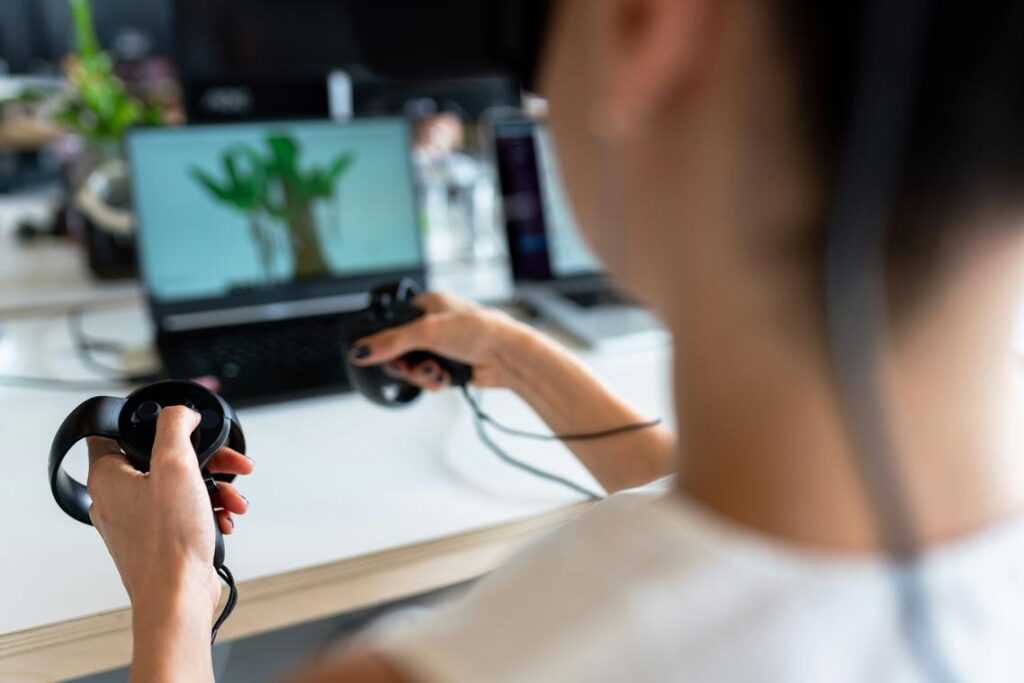
I’m tired of hearing that video games are just a waste of time.
You’ve probably defended your gaming habits more times than you can count. Or maybe you’re a parent trying to figure out if you should feel guilty about letting your kid play for another hour.
Here’s the thing: the whole “screen time is bad” argument misses what’s actually happening when someone plays a game. It’s lazy thinking.
I’ve spent years breaking down how games work and watching how players learn, adapt, and grow. The educational value is real. It’s just not obvious if you’re not paying attention.
This article shows you the specific ways why video games are educational togplayering. Not vague claims about hand-eye coordination. Real cognitive and developmental benefits backed by evidence.
We analyze game mechanics and player behavior patterns constantly. We know what skills different games build and how they transfer to real-world situations.
You’ll see concrete examples of what players actually learn, which types of games deliver which benefits, and how to spot the difference between mindless entertainment and genuine learning opportunities.
No fluff about gaming being the future of education. Just what’s provably true right now.
Cognitive Enhancement: How Games Build Better Brains
Your brain is plastic.
Not literally (that would be weird). But neuroplasticity is real. Your brain rewires itself based on what you do.
And video games? They’re basically a workout for your neurons.
Some people argue that games rot your brain. That all those hours in front of a screen turn you into a zombie who can’t focus on real-world tasks.
But the research tells a different story.
Let me break down what’s actually happening in your head when you play.
Problem-Solving and Critical Thinking
Strategy games don’t let you coast. When I’m playing Civilization, I’m juggling diplomacy, resource allocation, and military positioning all at once. One wrong move and my entire empire crumbles.
XCOM takes it further. You’re managing squad tactics while adapting to enemies that learn from your patterns. Portal 2 forces you to think in three dimensions, using physics to solve puzzles that would make your high school teacher proud.
These aren’t mindless button mashers. They’re digital chess matches that make you think several moves ahead.
Improved Memory and Spatial Reasoning
Open-world games build mental maps in your brain. When you’re exploring Hyrule in The Legend of Zelda: Breath of the Wild, you’re constantly tracking locations, remembering shrine positions, and navigating without a GPS telling you where to go.
Your working memory gets a serious workout. You remember which mountain had that rare ore, where the enemy camps are, and how to get back to that village without fast travel.
Studies from the University of California found that 3D platform games improved hippocampal function (that’s the part of your brain handling memory and spatial navigation). Players showed better performance on memory tests after just two weeks.
Faster Decision-Making Under Pressure
Action games train your brain to process information at ridiculous speeds. When bullets are flying in a shooter, you’re making split-second calls about positioning, threat assessment, and resource management.
The kicker? You’re not sacrificing accuracy for speed.
Research published in Current Biology showed that action game players made decisions 25% faster than non-players without losing precision. Their brains learned to gather visual information more efficiently and act on it quicker.
That’s why video games are educational Togplayering has become such a hot topic in cognitive science circles.
Enhanced Creativity
Minecraft is where things get interesting for creative thinking. You start with blocks and end up building entire cities, redstone computers (yes, actual working computers), and pixel art that rivals professional designs.
But it’s not just about building pretty things. You’re learning planning, resource management, and basic architectural principles. Want to build a castle? You need to gather materials, design the structure, and figure out how to make it functional. Engaging in Togplayering not only fuels your creativity but also enhances your skills in planning and resource management, essential for constructing everything from simple homes to grand castles.
Sandbox games give you a digital canvas with zero limits. That freedom teaches you to think outside the box and experiment without fear of failure.
Your brain doesn’t care if you’re solving a puzzle in Portal or a problem at work. It’s building the same neural pathways either way.
The Social Classroom: Teamwork and Communication in Gaming
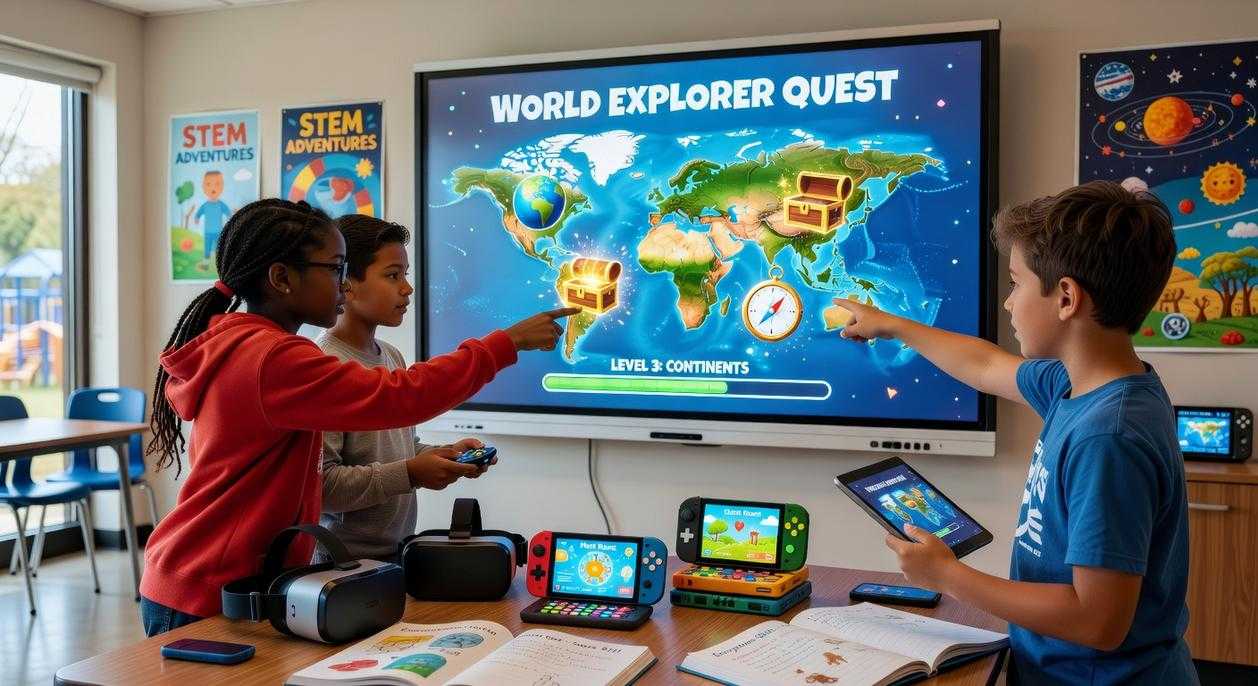
You’ve heard it before.
Gamers are lonely kids sitting in dark rooms with no social skills.
But that’s not what I see when I look at the data. And it’s definitely not what millions of players experience every day.
Here’s what’s really happening.
The multiplayer gaming market hit $56.8 billion in 2023 (Newzoo). That’s not pocket change. That’s proof that people want to play together.
Let me show you what teamwork actually looks like in games.
Take Valorant. You can’t win alone. I’ve tried. You need five players coordinating abilities, calling out enemy positions, and covering different angles. One person goes rogue and the whole team falls apart.
Or look at Overwatch. Every match requires players to pick complementary roles. You need tanks to absorb damage, healers to keep everyone alive, and damage dealers to push objectives. Miss one piece and you lose. Togplayering Gameplay Guide by Thinkofgamers builds on the same ideas we are discussing here.
Even cozy games like Stardew Valley teach collaboration. When you’re running a co-op farm, someone needs to water crops while another person handles the mines. You share resources, split tasks, and work toward common goals.
Research from the American Psychological Association found that 70% of gamers play with friends (APA, 2020). Not strangers. Friends.
But here’s where it gets interesting.
Games create natural leaders. I’ve watched quiet players step up in raids to direct 20-person teams through complex boss fights. They learn to give clear instructions under pressure. They figure out how to motivate people who are frustrated after the fifth wipe.
And when things go wrong? Players learn conflict resolution fast.
Someone messes up a callout. Another player gets tilted. You either figure out how to talk through it or you keep losing. Games give you a safe space to practice those conversations before you need them at work or school.
A study from Brigham Young University showed that teams who played games together for 45 minutes increased their productivity by 20% (BYU, 2019). That’s measurable improvement in real-world teamwork.
Here’s the part most people miss.
Gaming connects people across continents. I’ve got teammates in Japan, Brazil, and Germany. We coordinate strategies despite time zones. We learn about each other’s cultures through casual chat between matches.
| Game Type | Players Required | Key Skills Developed |
|---|---|---|
| ———– | —————– | ——————— |
| MOBA (League of Legends) | 5 per team | Strategic planning, role specialization |
| Battle Royale (Apex Legends) | 3 per squad | Quick decision making, resource sharing |
| MMO Raids (Final Fantasy XIV) | 8-24 players | Leadership, patience, coordination |
| Co-op Survival (Valheim) | 2-10 players | Task delegation, long-term planning |
Some people argue that online communication isn’t “real” social interaction. They say face-to-face contact is what matters.
But that ignores how we actually communicate now. Voice chat, video calls, text messages. These are normal ways people connect in 2024. Gaming just adds a shared activity to those conversations. In 2024, as we blend voice chats and video calls with our gaming sessions, Togplayering Gameplay Advice From Thinkofgamers becomes an invaluable resource for enhancing both our skills and the quality of our shared experiences.
Why video games are educational togplayering goes beyond academics. It’s about learning to work with others when stakes feel real (even if they’re just virtual).
The isolated gamer stereotype? It’s outdated. Most players I know have better communication skills than people who’ve never had to coordinate a 40-person guild raid.
You learn or you lose. Simple as that.
From Pixels to Practice: Resilience and Real-World Skills
You’ve heard it before.
Video games rot your brain. They’re a waste of time. Kids should be outside or reading books instead.
I’m not buying it.
Look, I understand where parents and teachers are coming from. They see someone glued to a screen for hours and assume nothing productive is happening. That concern makes sense on the surface.
But here’s what they’re missing.
Games teach you to fail. Over and over. And then they make you want to try again.
That Game Over screen? It’s not the end. It’s just feedback. You died because you went left instead of right. Because you didn’t dodge fast enough. Because you forgot to save your health potion for the boss fight.
So you adjust. You try a different approach. You get better.
That’s called resilience, and most people struggle with it their entire lives.
Some critics say this just teaches kids to be obsessed with winning. That it creates an unhealthy relationship with failure where you can’t accept real-world consequences.
But that’s backwards.
Real life doesn’t give you instant feedback like games do. You mess up at work and sometimes you don’t even know WHY for weeks. Games compress that learning cycle. They show you exactly what went wrong so you can fix it.
And it goes way deeper than just bouncing back from failure.
Take RPGs. I’m talking about games with actual dialogue trees and quest logs that read like novels. You’re processing thousands of words per session. Managing inventories with different stat modifiers. Calculating whether that new sword’s 15% crit bonus is worth losing 20 points of base damage.
That’s reading comprehension AND math. At the same time. While you’re also dodging fireballs.
Your hands are learning too. Every time you nail that combo or land a headshot, you’re training fine motor control and reaction time. Surgeons who game perform better in laparoscopic procedures (that’s a real study, not just gamer propaganda).
Then there’s the instruction piece.
Modern games don’t hold your hand anymore. You get a quest that says “Find the ancient artifact in the northern ruins” and you’ve got to figure out the rest. Check your map. Read the lore entries. Remember that NPC who mentioned something about a hidden passage three hours ago.
You’re managing multiple objectives. Prioritizing tasks. Following complex sequences of steps.
That’s executive function training.
Critics will say these skills don’t transfer. That being good at a game doesn’t make you good at life.
Sometimes they’re right. Being able to speedrun Dark Souls won’t help you file your taxes.
But the underlying skills? The ability to read quickly, think strategically, coordinate your movements, and push through frustration?
Those transfer just fine.
Why video games are educational togplayering isn’t about claiming games replace traditional learning. It’s about recognizing that different tools teach different things. And sometimes, the tool that looks like pure entertainment is actually doing serious work behind the scenes. Understanding why video games are important togplayering requires us to appreciate how these interactive experiences can foster critical thinking, teamwork, and problem-solving skills that complement traditional educational methods.Why Video Games Are Important Togplayering
You can find more practical gaming wisdom in our Togplayering Gameplay Advice From Thinkofgamers section.
The next time someone tells you gaming is pointless, ask them this: When’s the last time they practiced failing 50 times in an hour and came back for more?
Press Start on Learning
You came here wondering if video games actually teach you anything worthwhile.
I’ve shown you they do.
Games aren’t mindless time-wasters. They’re platforms where you build real skills while having fun.
The old argument that gaming rots your brain ignores what’s actually happening on screen. You’re solving problems. You’re working with teammates across the globe. You’re creating strategies and adapting when they fail.
Why video games are educational togplayering comes down to this: they put you in situations that demand cognitive work, social coordination, and creative thinking. And they make you want to keep going.
Here’s what you should do next: Stop treating games as guilty pleasures. Start recognizing the skills you’re building. Pay attention to what different games teach you.
The misconception that gaming equals wasted time needs to end.
Games are teaching tools wrapped in entertainment. They motivate you to learn in ways textbooks never could.
It’s time to see video games for what they really are. A legitimate way to develop abilities that matter in the real world. Why Video Games Are Important Togplayering.

 Ask Trevana Eldwain how they got into game reviews and insights and you'll probably get a longer answer than you expected. The short version: Trevana started doing it, got genuinely hooked, and at some point realized they had accumulated enough hard-won knowledge that it would be a waste not to share it. So they started writing.
What makes Trevana worth reading is that they skips the obvious stuff. Nobody needs another surface-level take on Game Reviews and Insights, Latest Gaming News, Upcoming Game Releases. What readers actually want is the nuance — the part that only becomes clear after you've made a few mistakes and figured out why. That's the territory Trevana operates in. The writing is direct, occasionally blunt, and always built around what's actually true rather than what sounds good in an article. They has little patience for filler, which means they's pieces tend to be denser with real information than the average post on the same subject.
Trevana doesn't write to impress anyone. They writes because they has things to say that they genuinely thinks people should hear. That motivation — basic as it sounds — produces something noticeably different from content written for clicks or word count. Readers pick up on it. The comments on Trevana's work tend to reflect that.
Ask Trevana Eldwain how they got into game reviews and insights and you'll probably get a longer answer than you expected. The short version: Trevana started doing it, got genuinely hooked, and at some point realized they had accumulated enough hard-won knowledge that it would be a waste not to share it. So they started writing.
What makes Trevana worth reading is that they skips the obvious stuff. Nobody needs another surface-level take on Game Reviews and Insights, Latest Gaming News, Upcoming Game Releases. What readers actually want is the nuance — the part that only becomes clear after you've made a few mistakes and figured out why. That's the territory Trevana operates in. The writing is direct, occasionally blunt, and always built around what's actually true rather than what sounds good in an article. They has little patience for filler, which means they's pieces tend to be denser with real information than the average post on the same subject.
Trevana doesn't write to impress anyone. They writes because they has things to say that they genuinely thinks people should hear. That motivation — basic as it sounds — produces something noticeably different from content written for clicks or word count. Readers pick up on it. The comments on Trevana's work tend to reflect that.