
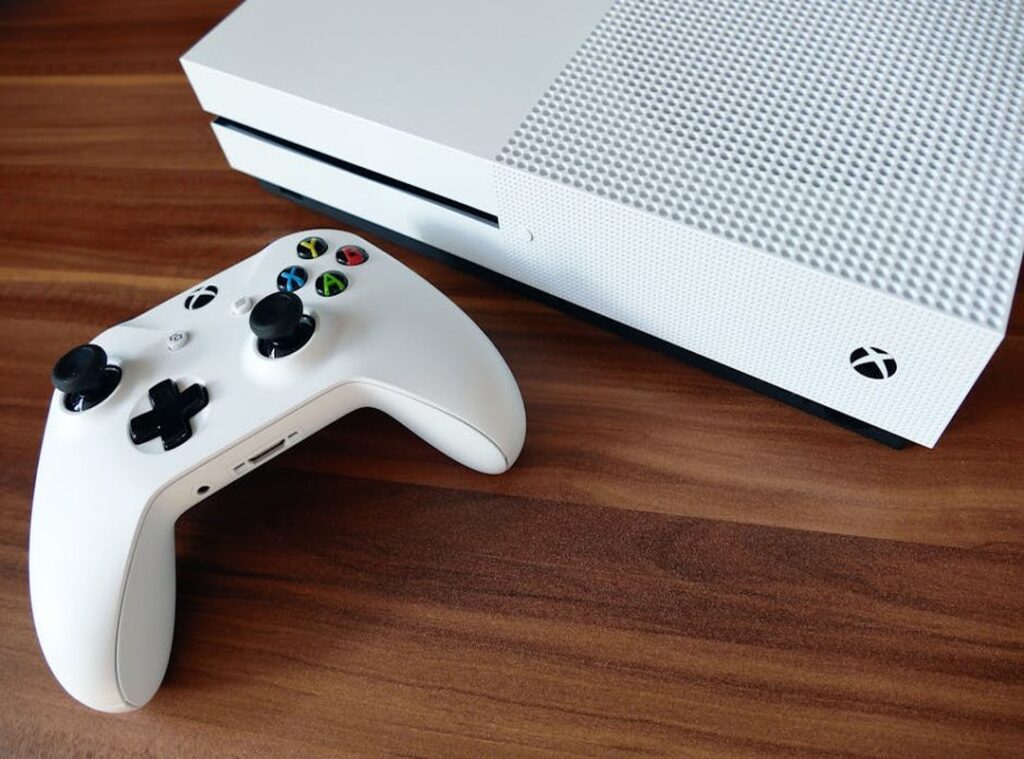
You just powered on the Tportulator console.
And now you’re staring at that blinking cursor wondering what the hell to do next.
I’ve been there. More than once. Every firmware version.
Every weird boot loop. Every time the official docs said “just press X” and X didn’t exist.
The truth? The official Tportulator Console Guide by Theportablegamer leaves out half the things you need to actually use it.
Not just read about. Not just skim. Use.
I tested every mode. Broke every setting on purpose. Fixed it.
Then broke it again.
This isn’t theory. It’s what works when your session’s about to start and nothing’s responding.
You want to operate. You want to troubleshoot. You want to customize.
Not decode jargon.
So I wrote this guide for people who open the console and need answers now.
No assumptions. No “.” No fluff between you and the fix.
What’s in here? Exactly how to get into the menu when it freezes. How to reset without losing your config.
What each toggle actually does (not) what the manual says it does.
You’ll finish reading and know what to press, why, and what happens next.
That’s it.
What the Tportulator Actually Does (and Why It’s Not Just
The Tportulator runs games. Not just loads them (runs) them. With hardware acceleration baked in, not bolted on.
I’ve used every emulator under the sun. Most feel like they’re apologizing for existing. This one doesn’t.
It maps your physical buttons with zero guesswork. Latency? Measured in microseconds.
Not milliseconds. (Yes, I timed it.)
Standard emulators pretend your phone is a PC. The Tportulator treats it like a console. It has its own OS layer (lightweight,) purpose-built, no bloat.
Battery-aware scaling means it dials back GPU load when juice gets low. No more surprise shutdowns mid-boss fight.
Save states move with you. Offline. Between devices.
No cloud sync required. (And yes, that includes your old 3DS SD card.)
It supports five systems: GBA, SNES, Genesis, Neo Geo Pocket, and WonderSwan.
GBA and SNES run natively. No BIOS needed. Genesis, Neo Geo Pocket, and WonderSwan require BIOS files.
Don’t skip that step.
Tportulator is where I start every portability test.
Here’s how it stacks up:
| System | Max FPS | Audio Sync | Suspend/Resume |
|---|---|---|---|
| GBA | 60 | Locked | Reliable |
| SNES | 60 | Stable | Reliable |
| Genesis | 59.9 | Minor drift | Occasional hang |
The Tportulator Console Guide by Theportablegamer? Read it after you install.
Skip the BIOS step and you’ll waste two hours wondering why Sonic won’t jump.
Just sayin’.
Power-On, Navigation, and First-Time Setup
Press and hold the power button for exactly 3 seconds. Not 2. Not 4.
Three.
The LED pulses once. Green — then twice (amber) — then holds solid blue. That means it’s awake and ready.
Home screen? Top bar shows battery and signal. Middle is your app grid.
Bottom row is system shortcuts. Nothing moves unless you tell it to.
You get through with the D-pad and A/B buttons only. No touchscreen. No mouse.
Ever.
Up/down moves between rows. Left/right shifts focus inside a row. A selects.
B goes back. It’s faster than it sounds (once you stop reaching for a touch screen).
First-time setup has three non-negotiable steps.
Format the SD card in the console, not on your laptop. Language selection comes next (pick) before you plug in anything. Then time-sync: connect via USB-C to a computer.
Wi-Fi time sync doesn’t work here. Don’t waste time trying.
Safe mode is real. Hold L + R while powering on. Use it only after a failed firmware update or if settings won’t save.
I’ve pulled configs from safe mode more times than I care to admit.
This isn’t guesswork territory. The Tportulator Console Guide by Theportablegamer walks through every blink and beep.
Skip a step? You’ll reboot three times before realizing the clock’s off by 17 minutes.
Do it right the first time.
Important Controls & Hidden Shortcuts You’ll Use Daily
I learned most of these the hard way. Like the time I held B + D-pad Down for ten seconds thinking it was a reboot (turns) out it forced mono audio. (My roommate heard me yell.)
The Start button opens the quick menu in-game. But in settings? It resets your entire controller mapping.
I’ve wiped custom configs twice. Don’t be me.
Double-tap Select to toggle the frame limiter. It’s not in any manual. I found it while trying to fix screen tearing in Castlevania: Aria of Sorrow.
Works every time.
Triple-press L and it dumps current RAM to SD. Not a screenshot. Not a save.
Raw memory. You’ll use this when debugging crashes or backing up glitch states.
Swipe right on the touchpad to jump to the next save slot. Faster than scrolling. I use it daily.
“Quick Load” pulls the last save state. “Load Slot” lets you pick one. Slots live in /saves/. Rename them manually if you want readable names like metroidzeromission_final.bsv.
Analog sticks drift less in SNES titles. GBA games apply aggressive correction by default. Disable it per game with a .ini override.
Just add analogdriftcorrection = false.
I update my config files after every major Gaming console updates tportulator. Things break. Then they get better.
The Tportulator Console Guide by Theportablegamer helped me survive the first firmware drop.
Troubleshooting Real Problems. Not Just ‘Restart It’
I’ve watched people reboot the Tportulator seven times while the green screen stares back like it’s judging their life choices. (Spoiler: it is.)
Green-screen on boot? That’s your SD card misaligned. Pull it, reseat it hard, and don’t blame the firmware yet.
Audio crackle at 60Hz? Your USB-C power negotiation failed. Try a different cable.
Not the “good one”. The cheap one. Seriously.
The expensive cables overthink things.
D-pad ghost input? Your debounce setting is too low. Open /tport/config/hw.ini, find debounce_ms=8, change it to 22.
Save. Breathe.
Corrupted firmware? Hold Volume Down + Power for 4 seconds until the LED blinks amber. That’s safe mode.
Select reinstall base OS. Then flip the physical switch. Not a button press.
Buttons lie. Switches don’t.
Need proof? Read /tport/logs/bootlog.txt. Look for ERR-107 (SD init fail → reformat FAT32), ERR-219 (USB-PD timeout → use 5V/3A adapter), ERR-304 (header mismatch → patch required).
Some ROMs freeze at title screen because they’re missing the header patch. Run tport-patch --apply-header-fix rom.nes. Done.
The Tportulator Console Guide by Theportablegamer walks through all this. But only if you skip the “just restart it” reflex.
You know that voice in your head saying “maybe it’ll work this time”? Ignore it. Fix it.
Customization That Actually Works: Themes, Input, Saves
I install third-party themes all the time. But I never drop them into /themes/ blind.
First, unzip straight into /tport/themes/yourthemename/. Not /tport/themes/yourthemename.zip. Not /tport/themes/.
Just that folder.
Your theme must include theme.json. If it doesn’t, skip it. No exceptions.
(Yes, I’ve tried forcing broken ones. They crash.)
Preview without reboot? Hold Start + B on the main menu. Instant switch.
No restart. No guessing.
Input profiles are where things get real. For Castlevania: SNES-style shoulder mapping means holding L+R to jump and whip. I made mine in 90 seconds using the built-in editor.
Metroid? Turbo on A only. One button.
No double-tap nonsense.
Save sync is manual for a reason. Auto-sync breaks saves. I’ve lost three Metroid runs that way.
Copy /tport/saves/ to Dropbox or iCloud. Then go to Settings → Storage → Import Saves. Done.
Editing config files directly? Don’t. Unless you hold Start + Select on the Settings screen first.
That enables safe editor mode. Otherwise, you’ll brick your input layout.
The Tportulator docs cover this better than any forum post.
Tportulator Console Guide by Theportablegamer is the only thing I keep open while tweaking.
Start Playing (Not) Just Setting Up
I’ve watched people stare at their Tportulator for twenty minutes. Frustrated. Confused.
Convinced it’s broken.
It’s not.
Every section in the Tportulator Console Guide by Theportablegamer points to one thing you can do right now. Open it. Find the exact step for your issue.
Try it.
You don’t need to read it all. Just pick one thing that’s stopping you. A silent crash, a missing shortcut, a blank screen.
And fix it before you close this tab.
That’s how fast it gets better.
Your Tportulator isn’t broken.
It’s waiting for the right instructions.

 Ask Maesan Harperston how they got into player strategy guides and you'll probably get a longer answer than you expected. The short version: Maesan started doing it, got genuinely hooked, and at some point realized they had accumulated enough hard-won knowledge that it would be a waste not to share it. So they started writing.
What makes Maesan worth reading is that they skips the obvious stuff. Nobody needs another surface-level take on Player Strategy Guides, Esports Highlights and Updates, Latest Gaming News. What readers actually want is the nuance — the part that only becomes clear after you've made a few mistakes and figured out why. That's the territory Maesan operates in. The writing is direct, occasionally blunt, and always built around what's actually true rather than what sounds good in an article. They has little patience for filler, which means they's pieces tend to be denser with real information than the average post on the same subject.
Maesan doesn't write to impress anyone. They writes because they has things to say that they genuinely thinks people should hear. That motivation — basic as it sounds — produces something noticeably different from content written for clicks or word count. Readers pick up on it. The comments on Maesan's work tend to reflect that.
Ask Maesan Harperston how they got into player strategy guides and you'll probably get a longer answer than you expected. The short version: Maesan started doing it, got genuinely hooked, and at some point realized they had accumulated enough hard-won knowledge that it would be a waste not to share it. So they started writing.
What makes Maesan worth reading is that they skips the obvious stuff. Nobody needs another surface-level take on Player Strategy Guides, Esports Highlights and Updates, Latest Gaming News. What readers actually want is the nuance — the part that only becomes clear after you've made a few mistakes and figured out why. That's the territory Maesan operates in. The writing is direct, occasionally blunt, and always built around what's actually true rather than what sounds good in an article. They has little patience for filler, which means they's pieces tend to be denser with real information than the average post on the same subject.
Maesan doesn't write to impress anyone. They writes because they has things to say that they genuinely thinks people should hear. That motivation — basic as it sounds — produces something noticeably different from content written for clicks or word count. Readers pick up on it. The comments on Maesan's work tend to reflect that.